
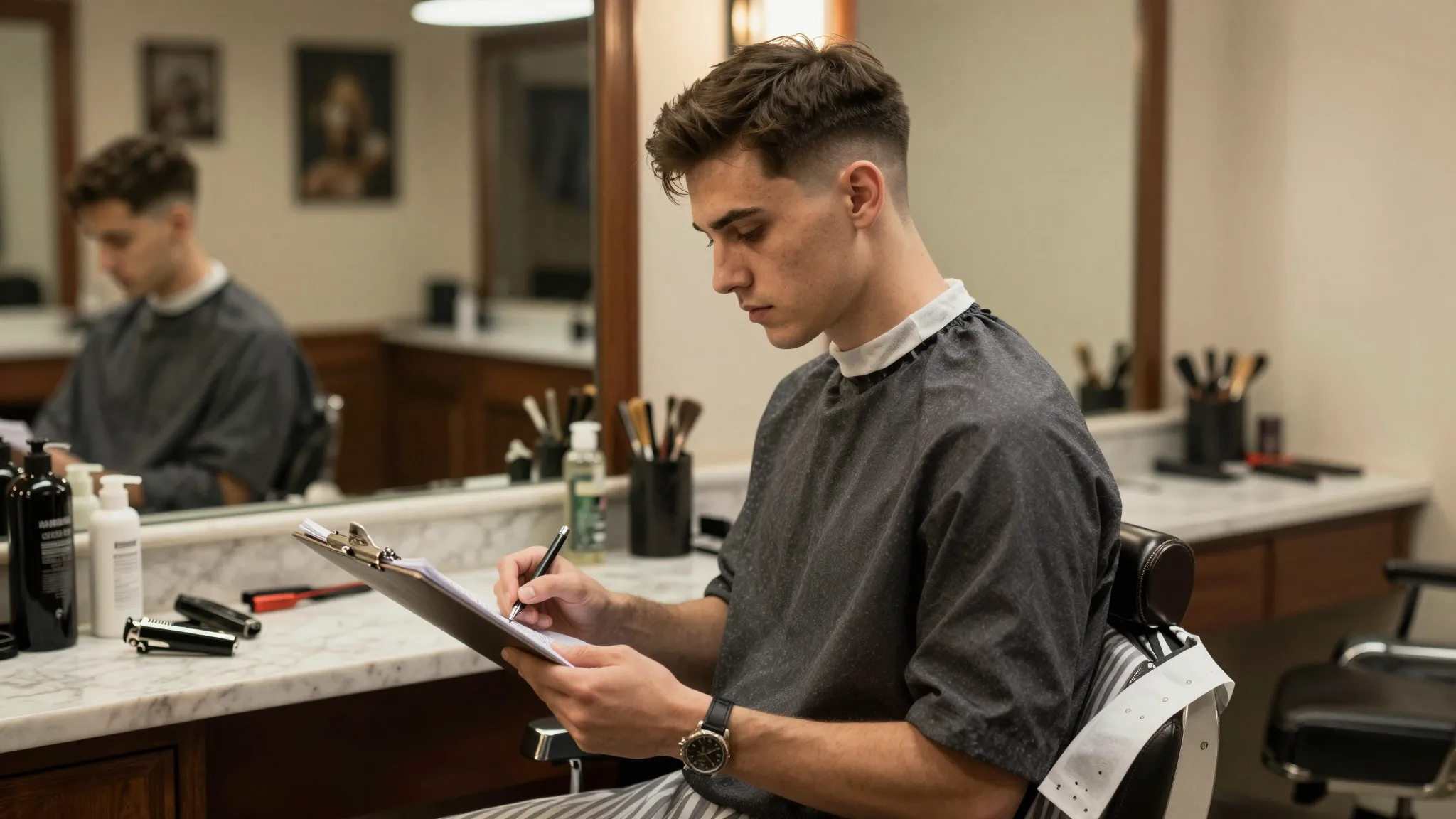
Do Barbers Need an LLC? 2026 Guide for Barbers
Roali (Roy) Biten
Founder, ROXO Hub · April 30, 2026
Run Your Barber Business Professionally
ROXO Hub gives independent barbers and booth renters online booking, digital waivers, invoicing, and tap-to-pay — all for $39.99/mo flat.
Start Your TrialIn this article
- 1.How an LLC Protects Barbers and Booth Renters From Personal Liability
- 2.Booth Renters Need an LLC Too
- 3.Shop Owners Have a Separate Layer of Exposure
- 4.LLC vs. Sole Proprietor for Barbers: What the Difference Actually Costs You
- 5.How to Form Your LLC Through Bizee
- 6.Get Your EIN Right After Approval
- 7.A Virtual Address Keeps Your Home Address Private
- 8.Update These Documents the Week Your LLC Is Approved
- 9.Your Clients Judge Your Business Before They Sit in Your Chair
- 10.Frequently Asked Questions
Do Barbers Need an LLC? 2026 Guide for Barbers
A client walks out of your chair, checks the mirror at home, decides their fade is uneven — then sends you a message threatening a refund or a lawyer. Or they claim you nicked their scalp during a shave, say they needed stitches, and now there's a formal letter in your inbox. Without an LLC, that dispute doesn't stay in the business lane — it lands directly on your personal savings, your car, your bank account. This article covers exactly what an LLC does for a barber, why booth renters need one just as much as shop owners, how to form one for as little as your state filing fee, and what to update once it's done.
How an LLC Protects Barbers and Booth Renters From Personal Liability
An LLC — Limited Liability Company — creates a legal wall between your personal finances and your business. If a client files a claim against you for an injury, an allergic reaction to a product, or a hairline they claim you ruined, the dispute is technically against the business entity — not you personally. Your personal bank account, car, and home equity stay out of it, as long as you maintain the LLC correctly: separate business account, signed client agreements, and consistent use of the LLC name.
There's also a credibility angle. Showing up as Marcus Thompson LLC on invoices and booking confirmations signals a professional operation. That matters when clients are paying $60–$150 per visit and deciding whether to rebook or send their friends your way.
Booth Renters Need an LLC Too
Here's what a lot of booth renters miss: renting a chair at someone else's shop doesn't make you their employee — it makes you an independent contractor running your own business inside their space. The shop's general liability policy typically covers the building and the shop owner's actions. It does not automatically cover your individual work on clients.
If a client reacts badly to a product you applied, slips near your station, or claims you damaged their hairline, you are personally liable — unless you have a business entity standing between you and that claim. An LLC means the dispute goes against your business, not your personal financial life. You are a business owner the moment you sign a booth rental agreement — the LLC just makes that real on paper.
Shop Owners Have a Separate Layer of Exposure
If you own a full shop — even a two-chair setup with one part-time assistant — you're exposed on two fronts: client incidents and employee actions. If your assistant makes a mistake on a client, that claim can travel up to you as the owner. An LLC combined with general liability insurance ($500–$800 per year is a common range for small barbershops) is the standard baseline most shop attorneys recommend before you open your doors.
LLC vs. Sole Proprietor for Barbers: What the Difference Actually Costs You
Operating as a sole proprietor is the default when you don't file anything — it costs nothing to start and the IRS taxes business income as personal income on Schedule C. The LLC doesn't change that tax treatment by default: a single-member LLC is a pass-through entity, meaning your income still lands on Schedule C at the same rate. What changes is everything on the liability side — every dollar of personal assets is on the table if someone sues you as a sole proprietor, with no legal wall between you and that claim. Your savings, your car, anything in your name is fair game in a judgment.
An LLC costs money upfront — state filing fees range from $50 in Kentucky to $500 in Massachusetts, with most states landing between $50 and $150. But for a barber grossing $60,000–$120,000 a year working your own chair, that one-time cost is straightforward to justify.
| Factor | Sole Proprietor | LLC |
|---|---|---|
| Personal liability | Full personal exposure | Protected (with proper upkeep) |
| Setup cost | $0 | $50–$500 (state filing fee) |
| Federal taxes | Schedule C on personal return | Schedule C by default — identical |
| Business credibility | Personal name only | LLC name on invoices and agreements |
| Booth rental agreement | Signed in your personal name | Signed by the LLC entity |
| Business bank account | Difficult to open | Easy with EIN + Articles of Organization |
How to Form Your LLC Through Bizee
Bizee (formerly Incfile) offers a $0 base plan — you pay only your state's filing fee, which is all you'd pay anywhere anyway. For most barbers, this is the most affordable route to getting it done.
Step 1: Choose Your State
Form your LLC in the state where you actually do business — almost always where your shop or booth is located. Filing in a different state to save money typically costs more long-term once you factor in foreign qualification fees and dual annual reporting requirements.
Step 2: Name Your LLC
Your business name needs to be available in your state's database. Most barbers use their shop name or their own name followed by LLC — for example, Clean Cuts Barbershop LLC. Bizee checks availability as part of the filing process so you don't have to hunt through state databases yourself.
Step 3: Assign a Registered Agent
A registered agent receives legal documents on your business's behalf. Bizee includes one free year of registered agent service on the base plan — this keeps your personal home address off public state filings from day one.
Step 4: File and Wait for Approval
Bizee submits your articles of organization to the state. Standard processing takes 1–3 weeks depending on your state; expedited options are available if you need it faster. You'll get confirmation once your LLC is officially active.
For the full walkthrough with state-by-state details, see: How to Start an LLC for Your Service Business in 2026.
Get Your EIN Right After Approval
An EIN (Employer Identification Number) is your business's tax ID — the equivalent of a Social Security number for your LLC. You apply for it free at irs.gov and receive it in about 10 minutes online. You need it to open a business bank account, and it's required the moment you bring on any assistant or hire anyone for your shop. Apply as soon as your LLC approval comes through.
A Virtual Address Keeps Your Home Address Private
Many states require a physical address on LLC filings — and those filings are public record. If you run admin, invoicing, or scheduling from home, a virtual address service gives your business a real street address without exposing where you live. Bizee's registered agent service handles the legal mail side; for a full virtual office address, services like Regus or Alliance Virtual typically run $10–$30 per month.
Update These Documents the Week Your LLC Is Approved
Forming the LLC is half the job. Once you have your official name and EIN, update the following so your business actually reflects your legal entity:
- Invoices: The business name on every invoice must match the LLC name exactly.
- Booking page: Update the business name your clients see when they schedule online.
- Client waivers and intake forms: These should reference the LLC name — not just your personal name — so any consent is tied to the business entity, not you individually.
- Business bank account: Open one immediately after getting your EIN. Mixing personal and business funds is the fastest way to lose the liability protection your LLC provides.
Your Clients Judge Your Business Before They Sit in Your Chair
An LLC protects your assets — but it doesn't run your appointments, collect payments, or send reminders. ROXO Hub is built for independent service pros like barbers: online booking clients can access 24/7, digital intake forms and waivers that carry your LLC name, invoicing, card payments and tap-to-pay with no card reader required, and automatic appointment reminders that protect your schedule.
When a client books through your ROXO Hub page, they see a professional business — not a cash-only side operation. You can optionally require a deposit at booking to filter out uncommitted clients, collect reviews automatically after each appointment, and track your revenue month over month without touching a spreadsheet. Most booking platforms charge $25–$90/month for scheduling alone and add fees for digital waivers, no-show protection, and automated reminders separately. ROXO Hub includes all of it at $39.99/month flat — no per-feature add-ons, no hidden fees.
Frequently Asked Questions
Do booth renters need an LLC?
Yes — when you rent a booth, you're an independent contractor, not an employee. The shop's insurance covers the shop owner's liability, not your individual services. If a client claims you injured them or caused a reaction with a product you used, the dispute lands on you personally without an LLC.
Does an LLC protect me if a client is unhappy with their cut?
An LLC protects your personal assets from business-related legal claims, including disputes over services. It doesn't guarantee you'll win — it means that if someone sues your business, your personal savings and property are generally shielded. Pair the LLC with general liability insurance for the most complete coverage.
Can I have an LLC and still rent a booth?
Absolutely. Your LLC is your business entity — it has nothing to do with the physical space you work in. You sign your booth rental agreement under your LLC name, and the shop owner typically doesn't care as long as rent arrives on time.
How much does it cost to form an LLC in my state?
State filing fees range from $50 in states like Kentucky and Arkansas to $500 in Massachusetts, with most states charging between $50 and $150. Bizee's base plan charges $0 in service fees — you only pay the state fee. Most states also require a small annual report fee, typically $10–$100 per year.
Do I need an LLC to hire an assistant?
You don't legally need an LLC before hiring someone, but it's strongly recommended. Bringing on an assistant creates employer liability — if they make a mistake that harms a client, that claim can reach you as the business owner. An LLC combined with your EIN, which is required for payroll, is the standard legal baseline before you bring anyone on.
Legal Notice: This article is for informational purposes only and does not constitute legal or tax advice. LLC formation requirements, state filing fees, and annual report obligations vary by state and change over time. Consult a licensed business attorney or CPA in your state before making decisions about your business entity structure.
Your Business Is Already Running — Set It Up Right
ROXO Hub's digital waivers and invoicing work under your LLC name from day one. Professional booking, payments, and client records for independent barbers at $39.99/mo.
Get StartedReady to run your barbers business smarter?
Setup takes 15 minutes. No contracts. Cancel anytime.
Roali (Roy) Biten
Founder, ROXO Hub
Disclaimer: The content in this article is provided for informational purposes only. ROXO Hub strives to publish accurate and helpful information, but we make no guarantees about the completeness, reliability, or accuracy of the content. Information may change over time and may not reflect the most current developments. Always conduct your own independent research and consult qualified professionals before making business decisions. ROXO Hub is not liable for any errors, omissions, or outcomes resulting from reliance on this content. Terms of Use.