
How to Collect Deposits as a PMU Artist in 2026
Roali (Roy) Biten
Founder, ROXO Hub · April 2, 2026
Stop Losing Hours to No-Shows
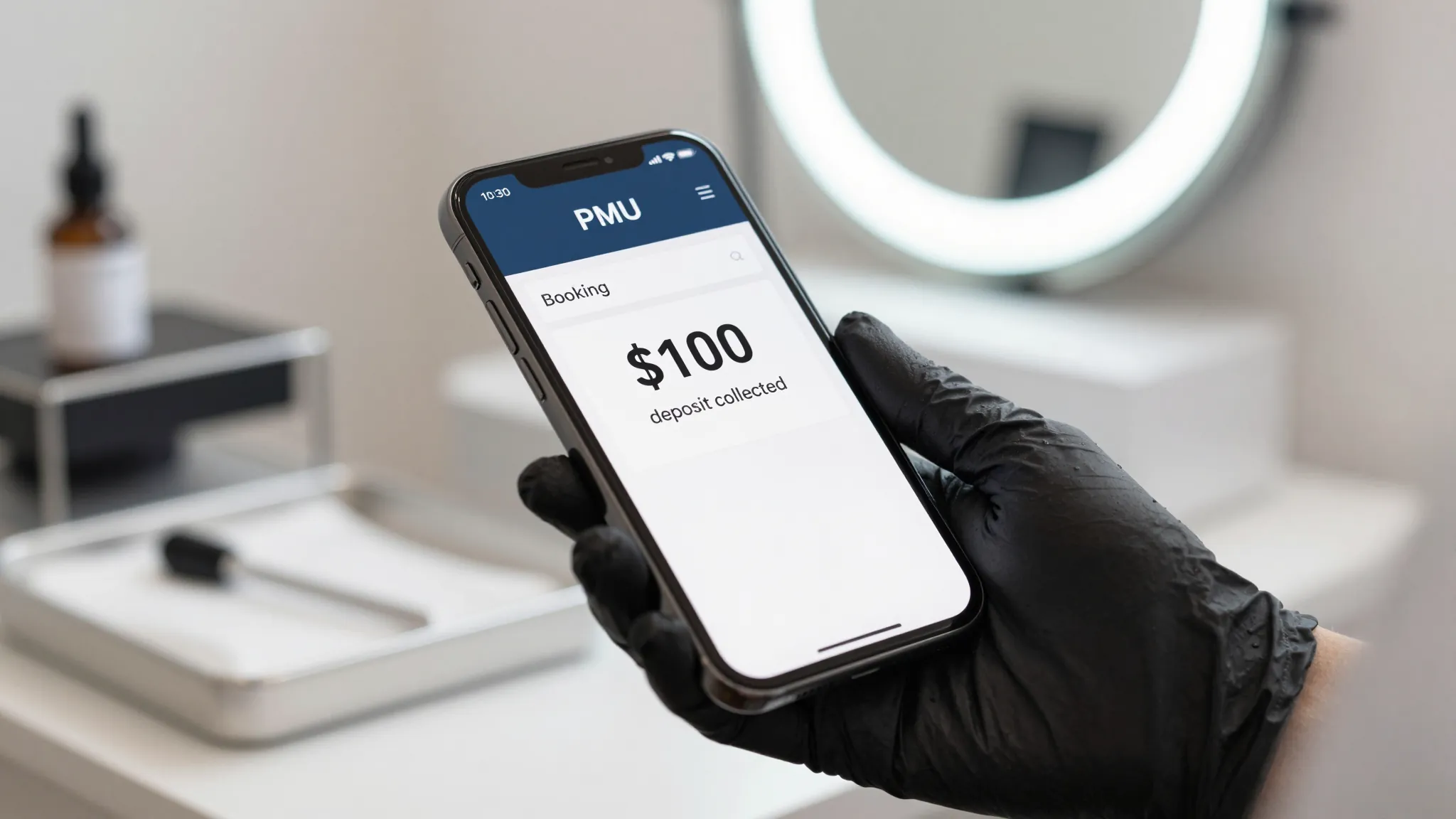
ROXO Hub lets you optionally require a deposit at booking — the slot only confirms after payment. Set it up in minutes, no card reader needed.
Start Your TrialIn this article
- 1.Step 1: Choose a Deposit Amount That Reflects Your Time
- 2.Step 2: Write a Cancellation and Refund Policy You Can Enforce
- 3.Step 3: Automate Collection at the Booking Step
- 4.Step 4: Communicate the Policy Before the Client Commits
- 5.Step 5: Handle Refund Requests Consistently
- 6.The right tool makes this easier
- 7.Frequently Asked Questions
How to Collect Deposits as a PMU Artist in 2026
A microblading or powder brows session blocks 2–4 hours of your calendar, and when a client ghosts that appointment you lose the slot, the revenue, and the prep time you put in. Most PMU artists charge $350–$650 per session — letting someone walk away from a confirmed booking without penalty is not a policy, it is a habit that costs real income. Collecting a deposit at booking is the single most effective protection you have. This article covers how to set the right deposit amount, write a policy that holds up, automate collection at booking, and handle refund requests consistently.
Step 1: Choose a Deposit Amount That Reflects Your Time
The standard range for PMU deposits is $50–$150 — roughly 20–30% of your total service price. For a $450 microblading appointment, a $100 deposit signals genuine commitment without feeling like a barrier to new clients. Set it too low (under $30) and clients still cancel freely; set it too high and you will turn away price-sensitive leads before they even get to the booking page.
Consider charging more for high-demand slots. If Saturday appointments fill within hours, a $150 deposit on weekend bookings is completely reasonable. Price your deposit to reflect what it actually costs when someone no-shows — an empty three-hour afternoon slot typically represents $300–$500 in lost revenue at standard PMU rates.
Step 2: Write a Cancellation and Refund Policy You Can Enforce
A deposit is only as strong as the policy behind it. Write it in plain language: state what the deposit covers, when it is forfeited, and under what conditions it transfers or refunds. A structure used by many PMU artists: deposit is non-refundable for cancellations with less than 48 hours notice, but transferable to a rescheduled appointment booked within 30 days.
Be specific about reschedules. Allowing unlimited reschedules with a "transferable" deposit will get abused. A limit of two reschedules before the deposit is forfeited is a defensible, widely used standard. Display your policy on your booking page, in your confirmation email, and in your intake form — three touch points means no client can credibly claim they never saw it.
Step 3: Automate Collection at the Booking Step
Manual deposit collection — texting a Venmo link, sending a Square invoice, following up to check if it was paid — creates friction and gives clients room to delay. When a client has to take a separate action to pay the deposit, some will not, and you will spend time chasing before the appointment even happens. Automating it means the deposit is collected inside the booking flow: the slot is only confirmed after payment clears.
This removes the awkward conversation entirely. You never have to follow up asking for the deposit — the system handles it. Platforms like ROXO Hub let you optionally enable deposit collection at booking, so clients pay when they choose their slot and the appointment confirms automatically only after payment is received.
Step 4: Communicate the Policy Before the Client Commits
Deposit surprises damage trust and generate disputes. Before a client selects a time slot, they should see the deposit amount, what it covers, and your cancellation terms clearly stated. This filters out uncommitted bookings and sets the right expectations from the first interaction. Place the policy summary directly on your booking page — not buried in a confirmation email they may not fully read.
Your intake form is a second opportunity to confirm agreement. Including a checkbox or signature field where clients acknowledge the deposit and cancellation policy creates a documented record. Digital consent forms — part of ROXO Hub's booking flow — make this a standard step rather than something you have to manage separately for each client.
Step 5: Handle Refund Requests Consistently
Every time you refund a deposit outside your stated policy, you establish a precedent — and clients talk. Decide in advance what constitutes a genuine exception (documented illness, bereavement) and whether those situations earn a deposit transfer rather than a full refund. Apply the same standard every time, document your reasoning briefly, and keep all communication professional and in writing.
If a client files a chargeback with their bank, your documentation is your defence: the signed policy, the booking timestamp, and the message history. Keeping all of this in one system — rather than scattered across texts, emails, Square, and paper forms — makes chargebacks easier to respond to and significantly harder for the client to win.
The right tool makes this easier
Managing deposits manually through Venmo, Zelle, or a separate invoicing app works until a chargeback arrives or a client insists they never agreed to your policy. At that point, fragmented records spread across multiple apps become a real liability — and one you could have avoided entirely.
ROXO Hub is built for service-based artists and includes deposit collection as an optional, built-in part of its booking flow. You can enable a deposit requirement so that when clients self-book online, the deposit amount is charged when they select their slot — and the appointment only confirms after payment is received. Clients book directly from your business website; they do not need to download any app. Your cancellation policy attaches to a digital consent form the client signs during the same booking session, creating a single timestamped record of the booking, payment, and policy agreement.
Deposit at Booking
Optionally require a deposit during online booking — the slot confirms only after payment clears.
Forms & Waivers
Attach your cancellation policy to the intake form. Clients sign before the booking is confirmed.
Card on File
Store a card for no-show protection — you decide if and when to apply a charge.
Auto Reminders
Automated appointment reminders reduce last-minute cancellations before they happen.
ROXO Hub is $39.99/month flat — no per-feature add-ons, no per-booking fees. The same subscription includes online booking, client management, invoicing, a website builder, and marketing tools.
Frequently Asked Questions
How much should a PMU artist charge for a deposit?
Most PMU artists charge $50–$150, which works out to roughly 20–30% of the total service price. For a $450 session, a $100 deposit is a widely accepted amount that signals genuine commitment without deterring interested clients.
Are PMU deposits refundable?
It depends entirely on the policy you write and communicate before the client books. Most PMU artists make deposits non-refundable for cancellations under 48 hours notice, but allow a transfer to a rescheduled appointment within a set window — commonly 30 days.
How do I collect a deposit without a card reader?
Online booking platforms like ROXO Hub process card payments directly through the booking page — no card reader, no cash app, no manual invoice needed. The client pays the deposit when selecting their appointment slot, and the booking confirms automatically once payment is received.
What happens if a client disputes a PMU deposit chargeback?
A signed cancellation policy and a timestamped booking record are your strongest defence. If your client signed a digital intake form acknowledging the deposit terms at the time of booking, you can submit that documentation to your payment processor to contest the dispute.
Do I need a formal contract for PMU deposits?
A signed digital intake or consent form that includes your deposit and cancellation terms carries significant weight and functions effectively as a contract in most dispute scenarios. A separate legal contract is optional, but worth considering for high-ticket services priced above $600.
How do I enforce a no-show fee as a PMU artist?
The cleanest method is storing a card on file at booking and stating your no-show fee policy clearly in writing before the appointment. With a card on file, you can choose to charge the fee after a no-show without chasing the client separately — you decide whether to apply it in each case.
Automate Your Deposit Collection
With ROXO Hub, deposits are collected as part of the booking flow — no follow-up texts, no chasing. Just confirmed appointments and protected time.
Start Your TrialReady to run your pmu business smarter?
Setup takes 15 minutes. No contracts. Cancel anytime.
Roali (Roy) Biten
Founder, ROXO Hub
Disclaimer: The content in this article is provided for informational purposes only. ROXO Hub strives to publish accurate and helpful information, but we make no guarantees about the completeness, reliability, or accuracy of the content. Information may change over time and may not reflect the most current developments. Always conduct your own independent research and consult qualified professionals before making business decisions. ROXO Hub is not liable for any errors, omissions, or outcomes resulting from reliance on this content. Terms of Use.