
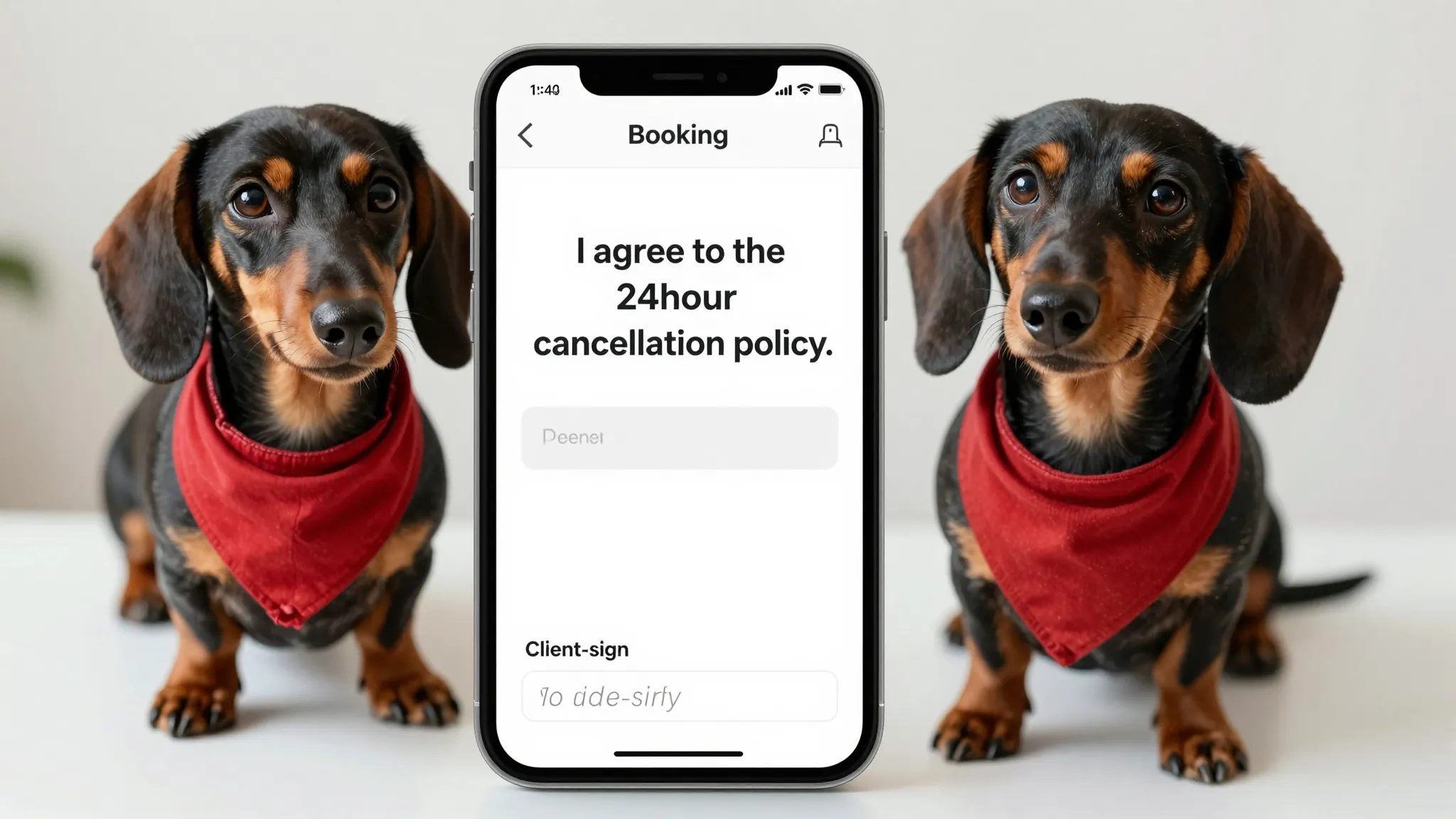
How to Create a Cancellation Policy for Mobile Pet Groomers
Roali (Roy) Biten
Founder, ROXO Hub · April 7, 2026
Stop absorbing cancellation losses
ROXO Hub lets you attach your cancellation policy to the booking flow, optionally collect deposits, and store cards on file — all at $39.99/month flat.
Start Your TrialIn this article
- 1.Step 1: Decide What Your Policy Needs to Cover
- 2.Step 2: Set Your Cancellation Window and Fee Structure
- 3.Step 3: Separate No-Shows from Late Cancellations
- 4.Step 4: Write It in Plain Language — Under 100 Words
- 5.Step 5: Deliver It Before the Booking Is Confirmed
- 6.Step 6: Enforce It Every Time, Without Exception
- 7.The right tool makes this easier
- 8.Frequently Asked Questions
Mobile Pet Groomer Cancellation Policy Guide 2026
Mobile groomers lose $150–$300 in revenue every time a client cancels last-minute or doesn't answer the door — and that figure doesn't include the fuel, the wasted drive time, or the paying client who could have filled that slot. Without a written policy in place, most groomers end up absorbing those losses silently because they have no documented standard to point to. A professional cancellation policy changes that: it sets expectations upfront, protects your income, and filters out clients who were never serious about showing up. This guide walks you through writing, communicating, and enforcing a cancellation policy that works — without making good clients feel like suspects.
Step 1: Decide What Your Policy Needs to Cover
Before you write a single sentence, map out the specific scenarios you've personally dealt with. A mobile pet grooming cancellation policy needs to address at least three situations: advance cancellations (24+ hours notice), late cancellations (inside your cutoff window), and no-shows (the client isn't home when you arrive). Treating all three with the same consequence is a mistake — a client who texts you two days out deserves a different outcome than one who leaves you sitting in their driveway for 20 minutes.
Step 2: Set Your Cancellation Window and Fee Structure
The standard cancellation window for mobile groomers is 24–48 hours. Anything inside that window warrants a fee because the slot is too late to rebook. Most groomers charge a flat $25–$50 for late cancellations, or 50% of the service price — whichever structure you choose, apply it consistently. A flat fee is simpler to explain; a percentage scales automatically when you're grooming large breeds or running full-package services priced at $100+.
Step 3: Separate No-Shows from Late Cancellations
A no-show — where you drive to the client's home and no one answers — is not the same as a cancellation. You've already burned fuel and time, and the slot is completely unrecoverable. No-shows typically warrant a full-service charge, or at minimum 75% of the appointment price. Write this distinction explicitly into your policy so clients understand the stakes of simply not answering the door.
Step 4: Write It in Plain Language — Under 100 Words
Legal-sounding policies get skimmed and ignored. Write yours conversationally: "Cancellations made less than 24 hours before your appointment are subject to a $40 fee. No-shows will be charged the full service price. A card on file is required to book." That's 40 words, completely clear, and nearly impossible to misunderstand. Avoid phrases like "breach of agreement" or "forfeiture of deposit" — they create friction before the relationship even starts.
Step 5: Deliver It Before the Booking Is Confirmed
The biggest enforcement mistake is sending the policy in a follow-up email after the appointment is already on the calendar. By then, clients feel like you're retroactively adding rules. The policy must appear — and must be acknowledged — at the point of booking, before any confirmation is issued. A digital intake form with a required checkbox or signature is the cleanest method: the client can't complete the booking without confirming they've read it, which removes any "I didn't know" defense later.
Step 6: Enforce It Every Time, Without Exception
Consistency is the only thing that makes a policy real. If you enforce it once and waive it the next time because the client seems upset, you've trained them to push back. If you want to allow exceptions for genuine emergencies — a pet illness, a family crisis — write a narrow exception clause directly into the policy itself, so exceptions are governed by the rule rather than your judgment in the moment. The goal is a policy clients take seriously because they know it applies every time.
The right tool makes this easier
Writing a policy takes 20 minutes. Enforcing it manually — chasing clients for fees, storing card numbers in a notes app, attaching policy PDFs to booking confirmations — takes ongoing effort that most groomers never maintain consistently. That's exactly where the policy breaks down in practice.
ROXO Hub is built to handle the enforcement side automatically. When a client books through your ROXO Hub booking page, you can attach your cancellation policy as a digital intake form that must be signed before the booking is confirmed — no chasing, no PDFs, no gaps in documentation. ROXO Hub also lets you optionally enable deposit collection at booking: if you choose to enable it, a deposit is charged when the client books, which you can retain or apply toward the service based on your policy terms. You can also enable card-on-file storage for no-show protection, so any applicable fees are processed without requiring a manual charge conversation with the client.
Digital Forms & Waivers
Clients sign your cancellation policy before booking is confirmed — no chasing signatures after the fact.
Optional Deposit Collection
If you choose to enable deposits, clients pay at booking — filtering out uncommitted clients before they waste a slot.
Card on File
Store a card for no-show protection so fees apply without a manual charge conversation.
Auto Reminders
Automated reminders go out before every appointment, reducing last-minute cancellations before they happen.
All of this is included at $39.99/month flat — no per-feature add-ons, no separate charges for forms, reminders, or payment processing. Your booking page, client records, and policy enforcement all run from one place.
Start Your Trial with ROXO Hub →
Frequently Asked Questions
What should a mobile pet grooming cancellation policy include?
At minimum, your policy should cover three scenarios: advance cancellations, late cancellations inside your cutoff window, and no-shows. Include the specific cancellation window (24 or 48 hours), the fee for each scenario, and any narrow exceptions you allow. Keep the language short and conversational — policies under 100 words are far more likely to be read and remembered by clients.
How much should I charge for a late cancellation fee?
Most mobile groomers charge $25–$50 flat, or 50% of the service price, for cancellations made inside the 24-hour window. The right amount covers your lost time and fuel without feeling punitive to a client who made an honest mistake. Whatever you set, apply it consistently — inconsistent enforcement is what trains clients to push back every time.
How do I enforce a cancellation policy without losing good clients?
The key is delivering the policy before booking is confirmed, not after. When clients agree to the terms upfront, enforcement feels like honoring a mutual agreement rather than springing a surprise penalty. Loyal, regular clients rarely trigger cancellation fees — the policy mainly filters out uncommitted clients who were unlikely to become regulars anyway.
Can I require a deposit for mobile pet grooming appointments?
Yes — many mobile groomers collect a deposit of $20–$50 to hold the booking slot. Platforms like ROXO Hub let you optionally enable deposit collection so it's charged automatically when the client books. A deposit both deters last-minute cancellations and ensures you recover some income if a client doesn't show up.
What's the best way to send a cancellation policy to clients?
The most effective method is a digital intake form attached directly to your booking flow, which clients must sign before the booking is confirmed. Emailing a policy PDF after the fact is easy for clients to ignore, and verbal explanations leave no documentation. Platforms like ROXO Hub let you attach forms to the booking page so acknowledgment is built in from the start.
How do I handle cancellations due to pet illness?
Pet illness is the most common exception mobile groomers face, and it's worth addressing in your policy explicitly. A practical approach is to waive the late fee once per client per year for illness-related cancellations, provided the client gives as much advance notice as possible. Writing this exception into the policy means you apply it by rule, not case by case — which keeps enforcement feeling fair rather than arbitrary.
Enforce your policy without the awkward conversations
ROXO Hub collects digital signatures at booking so you have documented proof every client agreed to your terms — before they're ever on your calendar.
Try ROXO HubReady to run your pet grooming business smarter?
Setup takes 15 minutes. No contracts. Cancel anytime.
Roali (Roy) Biten
Founder, ROXO Hub
Disclaimer: The content in this article is provided for informational purposes only. ROXO Hub strives to publish accurate and helpful information, but we make no guarantees about the completeness, reliability, or accuracy of the content. Information may change over time and may not reflect the most current developments. Always conduct your own independent research and consult qualified professionals before making business decisions. ROXO Hub is not liable for any errors, omissions, or outcomes resulting from reliance on this content. Terms of Use.