
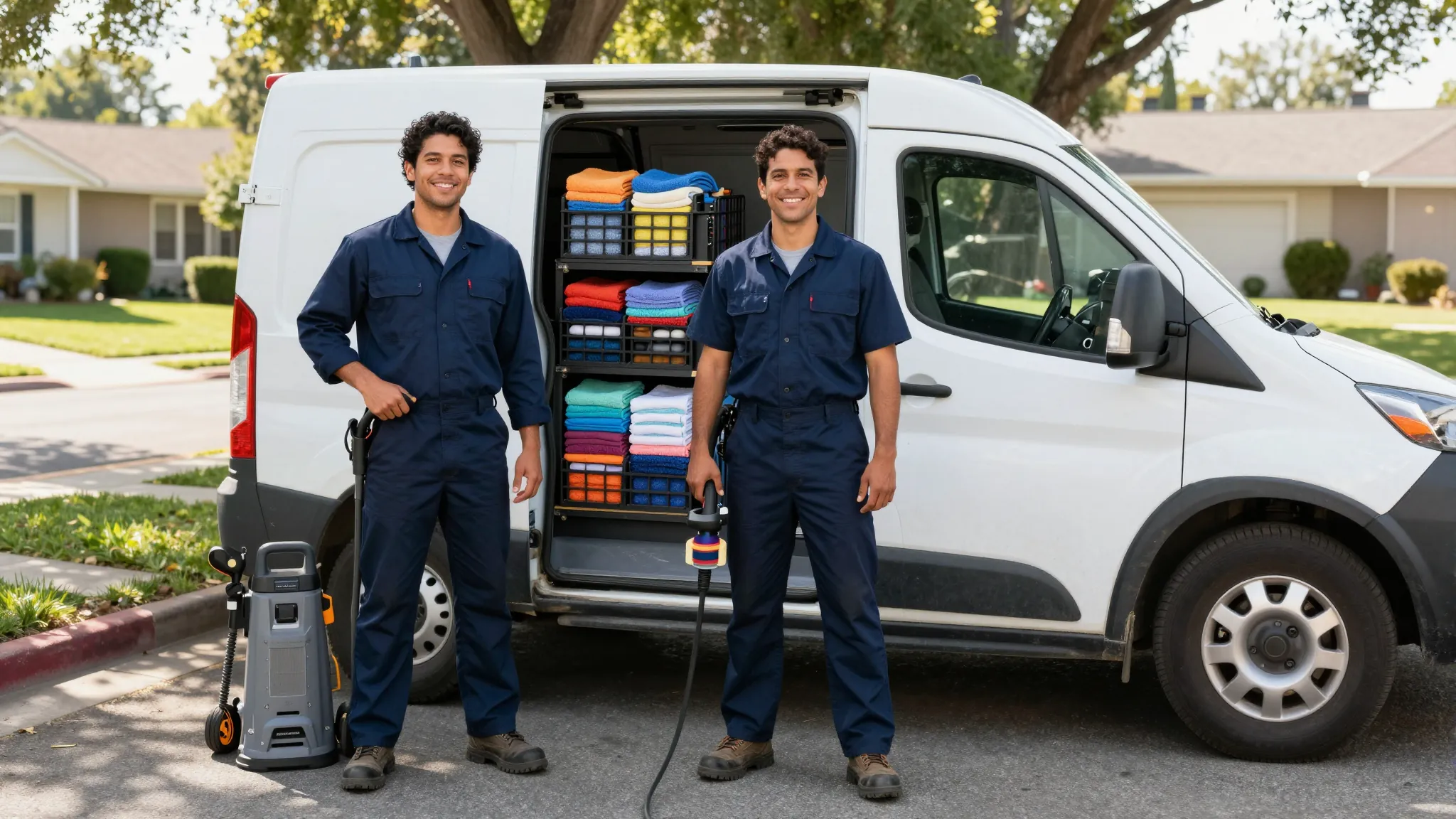
How to Start a Mobile Auto Detailing Business in 2026
Roali (Roy) Biten
Founder, ROXO Hub · March 22, 2026
Launch Your Detailing Business Right
ROXO Hub gives you online booking, tap-to-pay, digital waivers, automated reminders, and a professional website — everything a mobile detailer needs, for $39.99/month flat.
Start Free TrialIn this article
- 1.Table of Contents
- 2.Why Mobile Detailing Is a Strong Business in 2026
- 3.Legal Requirements: Licensing, Insurance & Registration
- 4.Equipment: What You Need vs. What You Don't
- 5.Your Service Menu: What to Offer
- 6.Pricing Your Mobile Detailing Services
- 7.Getting Your First Clients
- 8.Marketing Your Detailing Business Online
- 9.Booking, Payments & Scheduling Software
- 10.No-Show Protection & Client Management
- 11.Scaling Beyond Solo
- 12.Frequently Asked Questions
How to Start a Mobile Auto Detailing Business in 2026
Mobile detailing start-up costs can be as low as $2,500 — yet most new operators lose their first 90 days to pricing guesswork, no-show clients, and zero online presence. The global auto detailing market hit $13.5 billion in 2025 and is projected to grow 6.2% annually through 2030, meaning demand is real and accelerating. The barrier isn't the van or the soap — it's knowing exactly what steps to take in what order. This guide covers every stage of launching a profitable mobile auto detailing business in 2026: legal setup, equipment, pricing, marketing, booking software, and growth.
Why Mobile Detailing Is a Strong Business in 2026
The mobile auto detailing industry sits at a sweet spot that few service businesses enjoy: low start-up overhead, high repeat purchase rates, and a customer base that pays cash or card on the spot. Unlike a fixed-location shop, a mobile detailer carries no rent, no building utility bills, and the flexibility to scale by simply adding hours or a second operator.
The average American household owns 1.88 vehicles. Each car needs detailing 2–4 times per year. A solo mobile detailer completing 4 full details per day at an average ticket of $180 generates over $180,000 in annual revenue before expenses — and experienced operators regularly run 50–60% net margins once their route is optimized.
In 2026, the biggest competitive advantage isn't better soap or a shinier van — it's a professional online presence, frictionless online booking, and the ability to collect payment before the job starts. That's exactly where most new detailers fall behind, and exactly what this guide addresses.
Legal Requirements: Licensing, Insurance & Registration
Before you detail a single car, you need a legal business structure. Skipping this step exposes you to personal liability and can get you shut down at a moment's notice.
Step 1: Choose a Business Structure
Most solo mobile detailers start as a sole proprietorship or single-member LLC. An LLC costs $50–$500 to form depending on your state (California charges $70; Texas is $300), and it separates your personal assets from your business liabilities. If a client claims your chemicals damaged their car's clear coat, the LLC means they're suing the business — not you personally.
Step 2: Register Your Business Name
If you're operating under a name other than your legal name — say, "Apex Mobile Detailing" instead of "John Smith" — you need to file a DBA (Doing Business As) with your county or state. This typically costs $10–$100. Check your state's Secretary of State website for exact requirements and processing times.
Step 3: Get a General Business License
Most municipalities require a general business license, usually $25–$75/year. Some cities additionally require a home occupation permit if you're running the business from a residential address. Call your city's business licensing office — the process is usually a 20-minute form with same-week approval.
Step 4: Open a Business Bank Account
Never mix personal and business finances. A dedicated business checking account — Chase Business Complete Banking, Relay, or Bluevine are popular among small operators — makes tax filing infinitely easier and signals professionalism to clients and lenders. This is especially important when you apply for a business credit card or a vehicle loan later.
Step 5: Get the Right Insurance
General liability insurance is non-negotiable. For a mobile detailer, expect to pay $400–$900/year for a $1M/$2M general liability policy. Progressive Commercial, Next Insurance, and Thimble all offer same-day coverage online with instant Certificates of Insurance. You'll also need commercial auto coverage on your van — personal auto policies typically exclude business use — which adds $800–$1,500/year to your insurance spend.
Equipment: What You Need vs. What You Don't
New detailers routinely overspend on gear and underinvest in marketing. Here's what actually matters for launch versus what can wait until month two or three.
Essential Equipment (Day One)
- Pressure washer: A 2,000–3,000 PSI electric unit like the Greenworks 2,000 PSI (~$180) or a gas unit like the Simpson MegaShot (~$350). Gas is faster; electric is quieter for residential neighborhoods and apartment complexes.
- Water tank: A 50–100 gallon portable tank ($120–$200) gets you through 2–3 full details without needing access to the client's outdoor spigot. Essential for commercial parking lots, apartment complexes, and any property without accessible water.
- Dual-action polisher: The Rupes BigFoot LHR15 Mark III (~$350) is the industry standard for paint correction. Beginners can start with the Chemical Guys TORQX (~$130) and upgrade once volume justifies it.
- Wet/dry vacuum: The Armor All 2.5-gallon shop vac (~$35) is a reliable budget entry point. For premium interior work, the Mytee LTD12 heated extractor (~$800) is the go-to among professional operators.
- Chemicals starter kit: Budget $200–$400 for wash soap, clay bar, iron decontamination spray, interior cleaner, glass cleaner, tire shine, and a quality sealant or wax. Chemical Guys, Meguiar's, and Koch-Chemie are the brands operators trust for consistent results.
- Microfiber towels: A minimum of 30 quality towels. The Rag Company Edgeless 365 (~$2.50/each) is a staple in most professional kits — cheap towels cause swirl marks and lose you clients.
- Generator: A 2,200-watt inverter generator like the Honda EU2200i (~$1,100) gives you reliable power anywhere. Budget alternative: the WEN 56200i (~$400) for operators starting lean.
Nice-to-Have (Add After Month One)
- Hot water extractor for deep carpet and upholstery cleaning ($800–$2,000)
- Ozone generator for severe odor elimination ($150–$400)
- Ceramic coating supplies — Gtechniq, Gyeon, or IGL Coatings kits run $200–$600 per application
- Paint thickness gauge (~$150) — essential before any paint correction job to avoid cutting through clear coat
- Van wrap or vinyl graphics — a clean magnetic door sign from Vistaprint ($40) is enough to look professional at launch
Your Vehicle
You don't need a $60,000 Mercedes Sprinter on day one. A used Ford Transit Connect, Ram ProMaster City, or Toyota Sienna with rear seats removed gets most solo operators through their first year without a crippling monthly payment. Budget $8,000–$18,000 for a reliable used van under 100,000 miles. Invest in the wrap and premium equipment upgrades once your monthly revenue is consistent.
Your Service Menu: What to Offer
Offering too many services at launch confuses clients and makes you slow. Start with three to five core packages and expand when you can deliver them consistently within the time they're priced for — being over budget on time on your first few jobs trains you to undercharge.
Recommended Starter Menu
| Service | What's Included | Time (Sedan) | Suggested Price |
|---|---|---|---|
| Exterior Wash & Seal | Hand wash, clay bar, sealant, tire shine, windows | 1.5 hrs | $80–$120 |
| Interior Detail | Vacuum, wipe-down, glass, odor treatment | 2 hrs | $100–$150 |
| Full Detail (In & Out) | Exterior + interior combined | 3–4 hrs | $180–$280 |
| Paint Correction (1-Step) | Compound polish + finishing polish + sealant | 4–6 hrs | $350–$600 |
| Ceramic Coating | Full decon, 1-step correction, 2-layer coat + cure | 6–10 hrs | $700–$1,800 |
Vehicle size affects every package. Charge a $25–$50 surcharge for SUVs and trucks over sedans, and $50–$75 for oversized vehicles like Suburbans, Sprinters, or full-size trucks with crew cabs. Add a condition surcharge ($30–$75) to any interior package for heavily neglected vehicles — always inspect before quoting.
High-Value Add-Ons
Add-ons are how detailers push a $180 average ticket to $250 without doing more bookings. Offer: engine bay cleaning (+$50–$100), headlight restoration (+$40–$80), pet hair removal (+$30–$60), ozone odor treatment (+$40–$75), and wheel face polishing (+$30–$50). Price these clearly on your booking page so clients self-select before they arrive — it eliminates awkward upsell conversations at the job site.
Pricing Your Mobile Detailing Services
Most new detailers underprice, then burn out. Pricing is math, not guesswork — here's how to set rates that actually sustain your business.
Calculate Your Minimum Viable Rate
Add up your real monthly costs: van payment ($400), insurance ($170), chemicals and supplies ($250), fuel ($300), software and tools ($80), phone ($60), and a target take-home of $5,000/month. That's $6,260 in monthly expenses plus desired income. Working 22 days/month and completing 4 cars/day (88 bookings), you need to average $71/booking just to break even — before taxes. At a $200 average ticket, you're generating $17,600/month gross and keeping roughly $11,000 after expenses. That's the math that should inform your pricing, not the cheapest competitor in your area.
What Mobile Detailers Charge in 2026
- Entry-level markets (mid-size Midwest cities): Full detail $130–$200
- Mid-tier markets (suburban metros, Southeast): Full detail $180–$280
- Premium markets (Los Angeles, New York City, Miami, Dallas): Full detail $250–$450+
- Ceramic coating (all markets): $700–$2,500 depending on product tier, vehicle size, and paint prep required
Package Tiers vs. À La Carte
Package pricing — Bronze/Silver/Gold or Essential/Signature/Premium — converts better online because it gives clients a clear decision tree. À la carte menus overwhelm first-time bookers. Once clients know your work, they'll ask for specific add-ons on return visits — but for new online bookings, lead with three tiers.
For a complete market-rate breakdown by vehicle type and region, read our full guide: Mobile Detailing Pricing Guide 2026: What to Charge and Why.
Getting Your First Clients
The first 10 clients are the hardest. After that, referrals and reviews compound everything else. Here's the exact sequence that works.
Your Network (Days 1–14)
Text 50 people in your contacts — individual messages, not a mass blast: "Hey, I just launched a mobile detailing business. If you'd like a detail at a discounted launch rate, I'd love to earn your honest Google review." Offer your first 5–10 details at 20–30% below full price in exchange for a review. You need a minimum of 5 Google reviews before any paid advertising will convert.
Facebook Marketplace and Nextdoor (Days 7–30)
Post in Facebook Marketplace under Services with before/after photos. Nextdoor is massively underutilized by detailers — a single post in a neighborhood with 2,000 members can generate 5–10 inquiries in 48 hours. Both are free channels with immediate local reach and zero competition from national platforms.
Dealerships (Month 1–2)
Walk into used car dealerships and ask for the general manager or lot manager. Offer to detail their trade-ins for $80–$120/car. Dealerships need reconditioning constantly and are a reliable volume account — 10 cars/week at $90 is $900/week in guaranteed income. Once you have one dealer reference, use it as social proof to pitch competitors across town.
Fleet Accounts (Month 2–3)
Plumbing companies, electricians, real estate agencies, and corporate fleets pay for regular vehicle maintenance on a recurring schedule. A fleet account with 20 vehicles at $60/car/month is $1,200 in predictable, recurring revenue. Pitch the fleet manager with your COI, two dealership references, and a proposed recurring maintenance schedule. Close even one fleet account and your monthly break-even becomes dramatically easier.
For 12 proven client acquisition tactics with scripts and templates, read: How to Get More Detailing Clients in 2026: 12 Proven Strategies.
Marketing Your Detailing Business Online
In 2026, a detailer without a digital presence is functionally invisible to new clients. Here's exactly what to build and in what order.
Google Business Profile (Priority #1)
This is the single highest-ROI marketing action for any local service business. Set up your free Google Business Profile at business.google.com and select "Mobile" as your service area so you appear in search results across your entire territory — not just one address. Every 5-star review moves you up in local search rankings. Aim for 10 reviews in the first 60 days by asking every completed client directly. Platforms like ROXO Hub send automated review requests after each appointment so you never have to ask manually.
Instagram and TikTok
Detailing content performs exceptionally well on short-form video. A 30-second before/after interior transformation can get 100,000 views organically with zero ad spend — the contrast is inherently satisfying to watch. Post 3–5 times per week at launch. Use location-specific hashtags (#DallasDetailing, #MiamiAutoDetail, #[CityName]Detailer). Respond to every comment within the first hour — Instagram's algorithm treats early engagement as a quality signal and amplifies reach. Reels consistently outperform static posts by 3–5x on reach.
Your Own Professional Website
Do not send potential clients to your Instagram page as your primary booking destination. You need a professional website with your service packages, pricing, a before/after photo gallery, and a direct booking button. Wix and Squarespace cost $16–$25/month and give you a functional site, but they require separate integrations for booking and payments. A better option: ROXO Hub includes a full website builder that goes live in under 15 minutes, integrates directly with your booking calendar, and shows real-time availability — so clients book and pay in one uninterrupted flow instead of calling or DMing you.
Google Ads (Month 2+ Only)
Don't run Google Ads until you have a professional website and at least 5 Google reviews. Without social proof, your conversion rate will be under 2% and you'll burn budget on clicks that don't book. Once you have reviews and a clean booking page, a $300–$500/month Google Ads budget targeting "[city] mobile detailing" and "[city] car detail" generates 15–25 qualified leads per month depending on your market and competition level.
Email and Text Campaigns
Your existing client list is your most valuable marketing asset — people who have already paid you are 5–7x more likely to rebook than a cold prospect. A targeted text campaign: "Hey [Name], it's been 8 weeks since your last detail. Book this week and get free tire shine added" should convert 15–25% of recipients. ROXO Hub's marketing tools let you send segmented campaigns directly from your dashboard, filtered by last service date, service type, or spending history.
Booking, Payments & Scheduling Software
Running a detailing business on text messages and Venmo is a recipe for missed bookings, untracked deposits, and a schedule that looks like a mess. In 2026, professional booking software is table stakes — the question is which platform is actually built for how mobile detailers operate.
What Software Does a Mobile Detailer Actually Need?
Online Booking
Clients self-book 24/7 from your website or a booking link. No phone calls, no DM exchanges, no scheduling back-and-forth at 10pm.
Auto Reminders
Automated SMS and email reminders 48 hours and 24 hours before each appointment reduce no-shows by up to 40%.
Card-on-File & Deposits
Require a deposit or saved card at booking to eliminate ghost appointments and charge no-show fees automatically when needed.
Tap-to-Pay Processing
Accept cards and Apple Pay at the job site without a physical card reader. Instant payouts mean funds hit your account the same day.
Client History & Notes
Know which services each client has had, what products were used, and any special requests — without digging through old texts.
Digital Condition Waivers
Pre-service intake forms collected digitally document existing damage before you touch the car — protecting you from false claims.
Why ROXO Hub Is Built for Mobile Detailers
Most booking platforms were built for nail salons or yoga studios. They don't understand that a mobile detailer needs tap-to-pay without a card reader, digital condition waivers before every job, and a booking page that shows real availability for different service durations. ROXO Hub was built specifically for mobile service businesses, which means every feature maps directly to how a detailer actually operates in the field.
All-in-one booking, payments, client management, and marketing platform for mobile detailers. Includes online booking, auto reminders, card-on-file deposits, tap-to-pay, digital waivers, client history, website builder, marketing tools, and instant payouts — all for one flat monthly rate.
$39.99/mo flat — no per-feature add-ons, no hidden feesAt $39.99/month, ROXO Hub replaces what would otherwise cost $150–$250/month across separate subscriptions: a booking platform ($30–$60), payment processing fees ($15–$30), a website builder ($20–$25), and a marketing tool ($50–$100). Everything lives in one dashboard, accessible from your phone between jobs. Clients book directly from your website — they don't need to download any app.
For a head-to-head breakdown of detailing software options with real pricing comparisons, read: Best Booking Software for Mobile Detailers in 2026: Compared.
No-Show Protection & Client Management
A no-show in mobile detailing doesn't just cost you time — it costs you fuel to drive there, a slot you could have sold, and the psychological toll of sitting in an empty driveway. In 2026, there is zero reason to accept no-shows as an unavoidable cost of business.
Require a Deposit at Booking
A 25–50% deposit collected at the time of booking eliminates 90% of no-shows immediately. Clients who put money down show up. Clients who ghost have already funded your wasted time. ROXO Hub's no-show protection lets you set deposit requirements by service type and automatically charges saved cards for late cancellations according to the policy you set — no awkward conversations required.
Send Automated Reminders
Two reminders — one 48 hours out, one 24 hours out — give clients enough notice to reschedule when life happens while eliminating the "I forgot" no-show. ROXO Hub's auto reminders go out by both SMS and email, include the client's appointment details, and contain a one-click reschedule link so rescheduling takes the client 10 seconds instead of a phone call to you.
Digital Condition Waivers
Before touching a vehicle, clients should digitally sign an intake form documenting the car's existing condition, any pre-existing paint defects or interior damage, and the specific services authorized. This protects you if a client later claims you scratched a car that was already scratched. ROXO Hub's digital waivers are collected as part of the booking confirmation flow — no paper, no clipboard, no chasing signatures on the driveway.
Build a Client History That Pays You Back
Track every client over time: which services they've received, what products were used (especially important for paint correction — the wrong compound on previously corrected paint is an expensive mistake), vehicle details, preferred contact method, and notes like "heavy smoker — bring ozone" or "always wants pet hair add-on." A client history system turns a one-time booking into a lifelong relationship, and it makes every return visit feel like a premium, personalized experience.
Scaling Beyond Solo
Most mobile detailers hit a revenue ceiling around $8,000–$10,000/month as a solo operator — there are only so many billable hours in a day. Scaling requires either raising your average ticket, adding capacity, or both.
Raise Your Average Ticket First
Before hiring anyone, maximize revenue per job. If your average ticket is $150, systematically push it toward $220 through add-on upsells, better package positioning on your booking page, and an entry-level ceramic coating offering. Doubling your average ticket with the same client volume is the highest-leverage move available to a solo detailer — and it requires zero additional overhead.
Hire a Helper Before a Full Technician
A detail helper at $18–$22/hour can cut your time per job by 30–40% without the complexity of managing an independent technician. You handle the skilled work — polishing, coatings, paint correction — while they handle prep, cleanup, and interior vacuuming. This effectively lets you complete 5–6 jobs per day instead of 3–4 without the payroll burden of a full-time hire.
Adding a Second Van
A second operator changes your business model fundamentally — you become a manager as much as a technician. Before adding a second van, make sure you have: a booking system that routes and tracks jobs across multiple operators, standardized service checklists so quality is consistent, a clear training protocol, and enough consistent volume (40+ jobs/week) to keep two operators profitably busy. ROXO Hub's scheduling calendar shows your entire team's availability in one view, making multi-operator management straightforward without additional software.
Commercial and Fleet Contracts as a Revenue Floor
The most predictable path to scale is recurring commercial revenue. A single dealership account at 20 cars/week at $80/car is $1,600/week in guaranteed volume. Stack three or four commercial accounts and you have a revenue floor that makes payroll and equipment payments predictable — and retail solo clients become upside, not survival. Commercial accounts also fill your weekday slots while retail clients fill your weekends, leveling out your schedule year-round.
Frequently Asked Questions
How much does it cost to start a mobile detailing business?
You can launch a functional mobile detailing business for $2,500–$5,000. This covers a starter equipment kit (pressure washer, polisher, vacuum, chemicals, generator, and microfiber towels), basic insurance, and business registration. A van adds $8,000–$18,000 for a reliable used vehicle — bringing total first-year start-up investment to roughly $10,500–$23,000 for most operators.
Do I need a license to start a mobile detailing business?
Most states don't require a detailing-specific license, but you'll need a general business license ($25–$75/year) from your city or county, and a DBA filing if operating under a business name. An LLC ($50–$500 to form) is strongly recommended for personal liability protection. Commercial auto insurance on your van is legally required in all states.
What equipment do I need to start mobile detailing?
The day-one essentials are a 2,000–3,000 PSI pressure washer, a 50–100 gallon water tank, a dual-action polisher, a wet/dry vacuum, an inverter generator, a chemical starter kit, and quality microfiber towels. Expect to spend $1,500–$2,500 on equipment before your vehicle. A hot water extractor, ozone machine, and ceramic coating supplies can wait until month two.
How much can a mobile detailer make per year?
A solo detailer completing 4 full details per day at a $200 average ticket, working 5 days a week and 48 weeks a year, grosses approximately $192,000 annually before expenses. After costs (van, insurance, fuel, supplies, software), net income typically ranges from $65,000–$115,000 depending on market, service mix, and route efficiency. Operators who add ceramic coatings regularly push net income above $120,000.
What should I charge for a basic full detail?
A full interior and exterior detail on a sedan should be priced at $150–$280 depending on your market. Entry-level Midwest markets sit at $130–$180; coastal and major metro markets command $250–$400+. Charge $25–$50 more for SUVs and trucks, and add a condition surcharge ($30–$75) for heavily neglected vehicles. Never set prices based on the cheapest competitor in your area.
How do I get my first detailing clients?
Text 50 personal contacts and offer a launch discount in exchange for an honest Google review. Post your services on Facebook Marketplace and Nextdoor. Walk into used car dealerships and pitch reconditioning services for their trade-ins. Your first 10 clients come from hustle and personal outreach — after that, reviews and referrals compound the growth for you.
Do I need a water tank for mobile detailing?
Yes — a 50–100 gallon portable water tank ($120–$200) is highly recommended. Relying on clients to have accessible outdoor spigots significantly limits where you can work. Commercial properties, apartment complexes, office parks, and parking lots typically won't have accessible water. A tank pays for itself on the first commercial job you'd otherwise have to decline.
What insurance do I need for a mobile detailing business?
At minimum: general liability insurance ($400–$900/year for $1M/$2M coverage) and commercial auto insurance on your van ($800–$1,500/year). Next Insurance, Thimble, and Progressive Commercial all offer same-day online quotes with instant Certificates of Insurance — which you'll need for dealership and fleet accounts before they'll let you on their lot.
How do I prevent no-shows in my detailing business?
Require a 25–50% deposit at the time of booking, and send automated SMS and email reminders 48 hours and 24 hours before each appointment. Platforms like ROXO Hub handle both automatically — clients who book online enter a card on file, and reminder messages go out without you lifting a finger. This combination eliminates the vast majority of no-shows from day one.
What's the best software for mobile detailing businesses?
ROXO Hub is purpose-built for mobile service businesses like detailers. It includes online booking, automated reminders, card-on-file deposits, tap-to-pay (no card reader needed), digital condition waivers, client history, a website builder, marketing tools, and instant payouts — all at $39.99/month flat with no per-feature charges or contracts.
Can I start a mobile detailing business with no experience?
Yes, but invest in training before charging professional rates. Detailing courses from The Detailing Institute or the International Detailing Association (IDA) range from $200–$1,500 and teach you the techniques that prevent accidental paint damage. Practice on friends' and family's vehicles first — a single botched paint correction can cost thousands in restitution and destroy your reputation before you've built it.
How many cars can a mobile detailer do per day?
A solo operator doing standard full details (3–4 hours each) can realistically complete 2–3 per day. With a helper, you can push to 4–5. Express exterior wash-and-seal services (90 minutes) allow 4–5 per day solo. Most experienced operators optimize for fewer, higher-ticket jobs — two paint corrections at $450 each beats four basic details at $150 each in the same hours.
Should I specialize or offer full detailing services?
Specializing in ceramic coatings and paint correction dramatically increases your effective hourly rate ($200–$400/hour vs. $60–$80 for basic details) but requires more skill and higher equipment investment. Many successful detailers do both: basic details for client retention and recurring revenue, with coatings and correction for margin. Start broad, identify where your profit comes from, then gradually shift your menu toward those services.
How do I price ceramic coating services?
Ceramic coating pricing depends on vehicle size, coating layers, paint prep required, and your product cost. A single-layer coating on a sedan starts at $700–$1,000; two-layer coatings on SUVs range from $1,200–$2,000+. Your product cost per job (coating kit plus prep chemicals) typically runs $150–$400, leaving 60–75% gross margins on well-priced coating packages — far above standard detailing margins.
What is the profit margin on mobile detailing?
Experienced mobile detailers typically net 45–65% on standard detailing services after accounting for chemicals, fuel, insurance, van expenses, and software. Ceramic coatings and paint correction run even higher (60–75%) because the labor commands premium pricing relative to material cost. Your margins improve significantly as you optimize your route, raise your average ticket, and reduce no-shows.
How do I collect payment as a mobile detailer?
Use a platform that supports tap-to-pay so clients can pay with a phone or card at the job site — no cash handling or invoicing delays. ROXO Hub supports cards, Apple Pay, and tap-to-pay without a physical card reader, and offers instant payouts so funds hit your account the same day. Avoid Venmo and Zelle for business transactions — they complicate bookkeeping and offer no dispute or deposit protection.
Do I need a business bank account for mobile detailing?
Yes — a dedicated business checking account is essential from day one. Mixing personal and business finances complicates tax filing, makes it impossible to accurately track revenue and expenses, and can legally pierce your LLC's liability protection. Chase Business Complete Banking, Relay, and Bluevine are popular among solo detailing operators for their low fees and no minimum balance requirements.
How do I market my detailing business on Instagram?
Post before/after transformation videos 3–5 times per week — filthy-to-clean content performs exceptionally well organically. Use location-specific hashtags (#[CityName]Detailing, #MobileAuto[State]). Reels and Stories consistently outperform static posts by 3–5x on reach. Respond to every comment within the first hour and engage with local neighborhood accounts to build your local audience faster than broad hashtags alone.
What's the best van for a mobile detailing business?
The Ford Transit (full-size) is the most popular choice for established operators — maximum cargo space, strong reliability, and a nationwide dealer service network. The Ram ProMaster and Mercedes Sprinter are also strong options. For launch, a used Ford Transit Connect or Toyota Sienna converted for storage is a practical choice at $8,000–$15,000 that keeps your start-up costs low until revenue is consistent.
How do I handle bad weather cancellations?
Include a clear weather policy in your booking terms — most detailers allow free rescheduling for rain but charge the deposit for same-day cancellations with no contact. For interior-only services, weather is irrelevant and you can pitch these as "any-weather" options. Offering to work from the client's garage when possible also dramatically reduces weather-driven cancellations and positions you as a premium, accommodating operator.
Can I run a mobile detailing business part-time?
Absolutely — many successful operators start weekends-only while keeping their day job, building their client base and review count before going full-time. Eight to ten weekend bookings per month at a $200 average generates $1,600–$2,000 in additional monthly income. The key is having a professional online booking system so clients can schedule 24/7 without you needing to be available to respond to DMs or calls.
When should I hire my first employee?
Hire when you're consistently turning away work or your schedule is booked 3+ weeks out. Start with a part-time helper ($18–$22/hour in most markets) rather than a full independent technician — someone to handle vacuuming, product prep, and cleanup while you focus on skilled work. This extends your daily capacity 30–40% without the management complexity of an independent operator.
Stop Losing Jobs to No-Shows
ROXO Hub collects deposits at booking and sends automatic SMS and email reminders before every appointment — so you show up to full driveways, not empty ones.
Start Free TrialReady to run your auto detailing business smarter?
Setup takes 15 minutes. No contracts. Cancel anytime.
Roali (Roy) Biten
Founder, ROXO Hub