
PMU Touch-Up Policy: How to Keep Clients Coming Back
Roali (Roy) Biten
Founder, ROXO Hub · April 9, 2026
Manage your PMU business from one platform
ROXO Hub handles online booking, client history, digital waivers, and automated follow-up reminders — all for $39.99/month flat. No extra tools needed.
Start Your TrialIn this article
- 1.Step 1: Define What Your Initial Package Includes
- 2.Step 2: Set Your Complimentary Touch-Up Window
- 3.Step 3: Price Your Paid Touch-Up Appointments Correctly
- 4.Step 4: Automate Your Follow-Up Schedule
- 5.Step 5: Turn Annual Refreshes Into Predictable Revenue
- 6.The right tool makes this easier
- 7.Frequently Asked Questions
PMU Touch-Up Policy: Keep Clients Coming Back in 2026
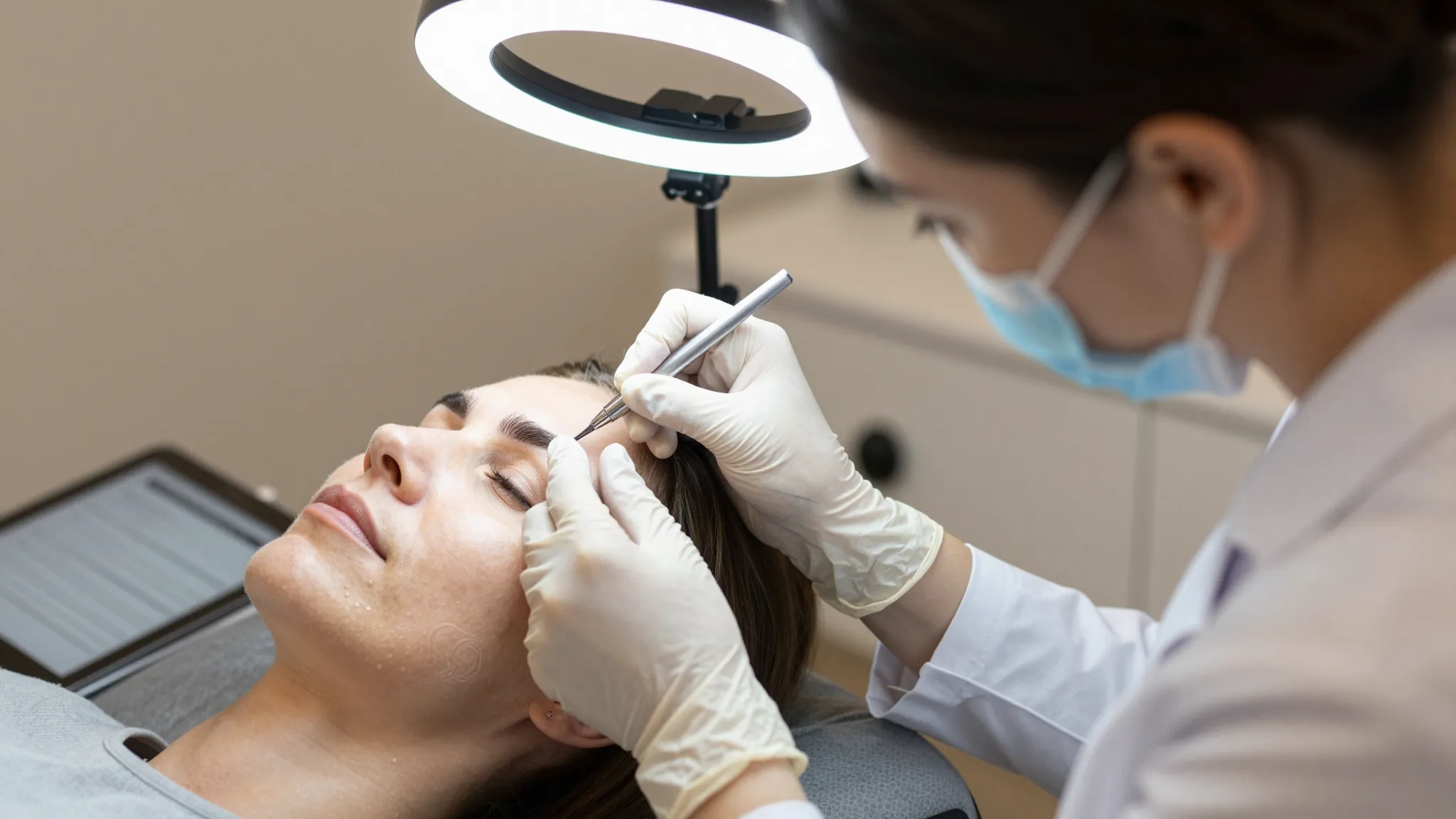
A microblading or ombré brow session averages $500–$700, and the client walks out happy — then disappears forever, not because the work was poor, but because no one gave them a structured reason to return. A well-written touch-up policy turns a one-time procedure into a multi-year relationship worth $800–$1,200 per client in total lifetime revenue. This guide covers exactly what your policy should include, when to offer complimentary versus paid visits, and how to automate the scheduling so clients rebook without you chasing them.
Step 1: Define What Your Initial Package Includes
Every PMU service — microblading, ombré brows, lip blush, lash line enhancement — requires at least one perfecting session after the initial appointment. Skin heals unpredictably: some clients retain 80% of pigment, others closer to 50%, depending on skin type, aftercare, and lifestyle. That first follow-up is where you correct uneven retention, add density to sparse areas, and refine the shape now that swelling has fully resolved. State this upfront in writing: the initial package includes the main session plus one complimentary perfecting appointment.
Write it exactly like this in your intake form: "Your initial session includes one complimentary perfecting appointment, scheduled between 6 and 10 weeks after your first visit. Perfecting appointments requested after 12 weeks are subject to the standard paid touch-up rate." Clients who read this at booking have zero grounds to dispute it later. Those who don't read it — that's what the signed waiver is for.
Step 2: Set Your Complimentary Touch-Up Window
The industry standard for most PMU services is 6–10 weeks post-initial session. Some artists extend to 12 weeks for clients with oily or combination skin, which tends to push pigment out faster during healing. Outside that window, the appointment is a paid service — and that line needs to be in writing before anyone sits in your chair.
Define the scenarios that void complimentary eligibility: appointments requested past 12 weeks, significant sun exposure or use of retinoids during healing, corrective work on procedures done by another artist, or clients who no-showed their original perfecting appointment without rescheduling. Each of these is a paid visit. Listing them explicitly in your policy means you don't have to negotiate each case individually — you simply point to the document the client already signed.
Step 3: Price Your Paid Touch-Up Appointments Correctly
Once the complimentary window closes, every return visit is a revenue opportunity. Annual color refreshes for microblading typically run $150–$250; lip blush and eyeliner refreshes tend to land at $200–$300, depending on your market and the complexity of the original work. A paid touch-up is shorter than the initial session — the design is already established, you're depositing pigment into existing strokes — so your effective hourly rate is actually higher even at a lower ticket price.
Set your paid touch-up rate at 35–50% of your initial session price. If your brow session is $600, a $225–$300 refresh is easy for a returning client to justify and still profitable for you. Publish this pricing publicly on your booking page — transparency here signals professionalism and removes sticker shock for clients who've been away 18 months and forgotten what a refresh costs.
Step 4: Automate Your Follow-Up Schedule
The most common reason PMU artists lose repeat clients is not poor results — it's silence. A client heals beautifully, the brows look great for 14 months, and then one day they realize they need a refresh. By that point, they're searching Google again instead of calling you. The window to capture that rebooking is the 10–12 month mark — before the pigment has faded enough to feel urgent, when the appointment still feels routine and expected.
ROXO Hub's automated reminders let you schedule follow-up messages at specific intervals after an appointment. Set one for 7 weeks — prompting the client to book their complimentary perfecting session — and another at 11 months, reminding them that an annual color refresh is coming up and their spot is available to book online. Both messages go out automatically based on the original appointment date, with no manual work on your end. You configure the timing and message content once; ROXO Hub handles every client from that point forward.
Step 5: Turn Annual Refreshes Into Predictable Revenue
A PMU artist with 60 active clients — each returning once per year for a $200 color boost — generates $12,000 in annual refresh revenue on top of new client acquisition. That number doesn't require marketing spend, cold outreach, or a single new client. It's purely a function of keeping the clients you already converted on a maintenance schedule.
Make rebooking frictionless at the perfecting appointment itself. Tell the client directly: "Most clients come back around the 12-month mark for a color refresh — I'll send you a reminder when it's time." That one sentence sets the expectation and removes any awkwardness around the follow-up message they'll receive later. When the automated reminder arrives at month 11, it doesn't feel like a sales pitch — it feels like the service they already agreed to and were expecting.
The right tool makes this easier
Tracking who's inside their complimentary window, who's due for an annual refresh, and who still hasn't booked their perfecting appointment is manageable with 10 clients. With 40, it breaks down completely — and the revenue walks out the door with it. ROXO Hub is built for service-based businesses like PMU artists who need booking, client history, digital waivers, and automated follow-ups in a single platform without stitching together four separate tools.
With ROXO Hub, you attach your touch-up policy directly to your digital intake form and collect a signed acknowledgment before the first session. Automated reminders go out at the intervals you set — 7 weeks for the perfecting appointment, 11 months for the annual refresh — with no manual follow-up on your end. Clients self-book through your ROXO Hub website 24/7, and you can optionally enable deposit collection or card-on-file for paid touch-up appointments to reduce no-shows on return visits. All of this is included in one flat rate: $39.99/month, no per-feature add-ons, no hidden fees.
Frequently Asked Questions
What should a PMU touch-up policy include?
A solid PMU touch-up policy should define what's included in the initial package (typically one complimentary perfecting session), the timeframe for that complimentary appointment (usually 6–10 weeks post-initial), the pricing for paid touch-ups after the window closes, and the circumstances that void complimentary eligibility — such as late scheduling, retinoid use during healing, or no-shows. Having clients sign this before the first session is essential.
How much should I charge for a PMU touch-up?
Paid PMU touch-up appointments typically run 35–50% of your initial session price. For most artists, that works out to $150–$300 depending on the service — microblading refreshes tend to fall in the $150–$250 range, while lip blush and eyeliner refreshes can run $200–$300. Publishing your paid touch-up pricing publicly removes sticker shock for returning clients.
How long after microblading should the touch-up be done?
The standard window for a microblading perfecting appointment is 6–10 weeks after the initial session, once the skin has fully healed and retained pigment is clearly visible. Some artists extend to 12 weeks for clients with oily skin. After 12 weeks, most artists classify the appointment as a paid touch-up rather than a complimentary perfecting session.
How do I get PMU clients to book their annual color refresh?
Mention the annual refresh directly at the perfecting appointment — set the expectation that a color boost at 12 months is part of the normal maintenance cycle for their procedure. Then use automated follow-up reminders at the 11-month mark so the message arrives before the pigment has visibly faded and while the client still feels motivated to maintain their results.
Can I charge a client who missed their complimentary touch-up window?
Yes — if your policy documents the complimentary window clearly and the client signed an intake form acknowledging it, a late touch-up is a paid appointment. Most artists charge their standard paid touch-up rate in this situation. The key is having the policy in writing before the first session; trying to enforce an undocumented verbal policy is where disputes arise.
Stop chasing clients for touch-up bookings
ROXO Hub's automated reminders send follow-up messages at the intervals you set — so clients book their perfecting and annual refresh appointments without you lifting a finger.
Try ROXO HubReady to run your pmu business smarter?
Setup takes 15 minutes. No contracts. Cancel anytime.
Roali (Roy) Biten
Founder, ROXO Hub
Disclaimer: The content in this article is provided for informational purposes only. ROXO Hub strives to publish accurate and helpful information, but we make no guarantees about the completeness, reliability, or accuracy of the content. Information may change over time and may not reflect the most current developments. Always conduct your own independent research and consult qualified professionals before making business decisions. ROXO Hub is not liable for any errors, omissions, or outcomes resulting from reliance on this content. Terms of Use.