
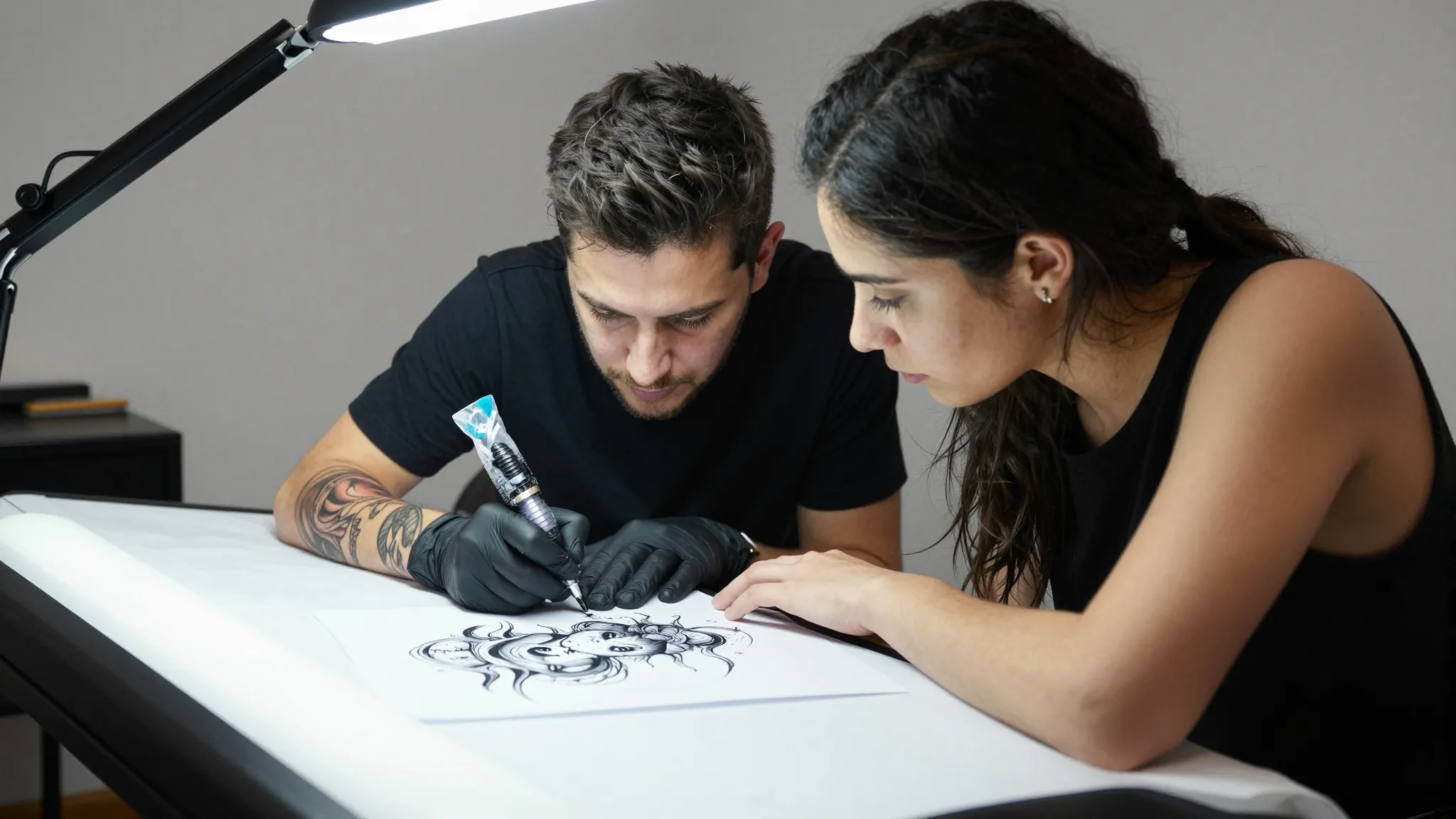
Tattoo Artist Pricing Guide: How to Price Custom Work and Flash Tattoos
Roali (Roy) Biten
Founder, ROXO Hub · April 17, 2026
Run Your Tattoo Business on One Platform
ROXO Hub handles online booking, optional deposit collection, digital waivers, and payments — all for $39.99/month flat.
Start Your TrialIn this article
- 1.Step 1: Calculate Your Hourly Rate Before Setting Any Prices
- 2.Step 2: Set a Shop Minimum That Actually Covers Your Costs
- 3.Step 3: Price Custom Tattoos by Size and Complexity
- 4.Step 4: Price Flash Tattoos as a Product, Not Just a Service
- 5.Step 5: Use Deposits to Protect Your Design Time
- 6.Step 6: Communicate Your Pricing Without Apologizing for It
- 7.The Right Tool Makes This Easier
- 8.Frequently Asked Questions
Tattoo Pricing Guide 2026: Custom Work & Flash
Tattoo artists undercharge for at least the first two years of their career — not because their work isn't worth more, but because nobody taught them how to build an actual pricing system. Guessing on custom pieces, undercutting flash, and skipping a shop minimum all leave hundreds of dollars per week on the table. This guide walks you through exactly how to calculate your hourly rate, price custom tattoos by size and complexity, structure flash pricing, and protect your time with deposits.
Step 1: Calculate Your Hourly Rate Before Setting Any Prices
Your hourly rate is the foundation of every pricing decision you make — and it starts with your real costs, not a number you picked from looking at your competition. Break it down: booth rent or studio overhead typically runs $800–$1,500/month; supplies (needles, ink, caps, gloves, barriers) cost a working artist another $200–$400/month. If you want to take home $60,000/year after expenses and you tattoo 30 client-hours per week across 48 working weeks, you need to earn at least $41.67 per hour above your costs. Layer in overhead and most mid-market artists land at $150–$250/hour; artists in major cities like NYC, LA, Chicago, or Miami regularly charge $250–$400+/hour.
Don't set your rate by copying the shop down the street. Their overhead, clientele, and cost of living may be completely different from yours. Run your own numbers first, then use market rates as a sanity check — not a ceiling.
Step 2: Set a Shop Minimum That Actually Covers Your Costs
A shop minimum exists because every appointment — even a 20-minute walk-in — costs real money before you ever touch the client. Factor in what goes into the smallest piece: a full needle cartridge set ($2–$5), ink caps, gloves, barrier wrap, a stencil, and 30–45 minutes of your time across check-in, stenciling, execution, and aftercare instructions. Industry-standard shop minimums run $60–$100 in lower cost-of-living markets and $100–$200+ in major metros. An $80 minimum isn't padding — at that level, it barely covers break-even on setup and supplies. Post your minimum clearly on your booking page and in your social bio so it's never a surprise conversation at the chair.
Step 3: Price Custom Tattoos by Size and Complexity
Custom tattoos should use a hybrid model: estimated hours multiplied by your hourly rate, adjusted upward for design complexity and difficult placement. A palm-sized black-and-grey piece in a simple fine-line style might take 1.5 hours — at $175/hour that's $262. The same size in full-color neo-traditional with heavy shading and detail could take 3–4 hours and justifiably double or triple that estimate. Use this sizing framework as your starting baseline:
- Tiny (under 2 inches): Shop minimum — $80–$150
- Small (2–4 inches): $150–$350 depending on style and detail level
- Medium (4–6 inches): $350–$600+
- Large (half-sleeve or full thigh panel): $600–$1,500+ per session
- Full sleeve: $2,000–$5,000+ across multiple sessions
Always quote a range in writing during the consultation — never a locked price on a piece you haven't drawn yet. Build in a 15–20% complexity buffer for heavy linework, small text, geometric precision work, or demanding placements like ribs, hands, feet, and the back of the neck. These consistently take longer than they look on paper, and underquoting them eats directly into your hourly rate.
Step 4: Price Flash Tattoos as a Product, Not Just a Service
Flash tattoos are pre-drawn designs — you invested the creative labor before the client ever sat down. That changes how you price them. Rather than calculating purely on execution hours, price flash on perceived design value plus the time required to execute it. A clean black flash design (snake, dagger, floral motif, script) at 3 inches might take 45 minutes and reasonably command $150–$200 — well above what a raw hourly calculation would suggest, because the client is also buying the design asset. Color flash with fills, gradients, and layered shading typically prices 20–30% higher than comparable black-and-grey work, reflecting additional supplies and execution time.
Run flash events strategically — Friday flash days, convention specials, or limited seasonal sheets — to fill gaps in your calendar without permanently lowering your standard custom rates. When a flash design sells through, retire it. Scarcity makes the next sheet more desirable and gives loyal clients a reason to keep checking your page.
Step 5: Use Deposits to Protect Your Design Time
Deposits are the most effective tool tattoo artists have against ghost bookings and wasted design hours. Industry-standard non-refundable deposits run $50–$200 depending on project scope — credited toward the final price. If you accept a $700 custom project, draw for three hours, and the client cancels the morning of, you've lost both the calendar slot and the drawing time. Requiring a deposit at booking filters out clients who aren't serious before they cost you anything. When you optionally enable deposit collection through your booking system, you also position yourself professionally — clients who've already paid to hold their spot treat the appointment differently than those who booked with nothing at stake.
Structure your deposit policy clearly in writing: the deposit amount, the non-refundability window (typically 48–72 hours before the appointment), and exactly how it applies to the final price. Clients should see and acknowledge this before they pay — not after. ROXO Hub lets you configure this so the policy appears at the time of booking and the deposit is collected in the same step, removing all the back-and-forth of chasing payment after confirming an appointment.
Step 6: Communicate Your Pricing Without Apologizing for It
Posting your shop minimum, hourly rate, and example price points publicly — on your booking page, in your Instagram bio link, and in your highlights — eliminates low-ball DMs before they land in your inbox. Pair real price examples with photos from your actual portfolio: "This 4-inch black-and-grey forearm piece: $280. This half-sleeve session: $800 for 4 hours." Specific numbers matched to visible work build trust faster than vague ranges, and they pre-qualify every client who reaches out.
When a client says your price is more than expected, hold your rate. Explain what it covers — your experience level, the quality of your supplies, your studio environment — and explore whether a smaller or simpler piece might work within their budget. A client who respects your work will value the conversation. One who only wants cheap ink was never a good fit for your books anyway.
The Right Tool Makes This Easier
Pricing strategy gets you to the right numbers. A professional booking system makes sure clients commit to those numbers — with deposits, signed waivers, and confirmed appointments. ROXO Hub is built for tattoo artists and independent studio owners who want clean, professional infrastructure without enterprise-level complexity or cost.
Online Booking
Clients self-book 24/7 directly from your website — no DMs required to hold a slot, no back-and-forth on availability.
Optional Deposit Collection
Enable deposits at booking so your custom design time is protected. Clients pay when they book — no invoices to chase afterward.
Digital Waivers & Intake Forms
Clients complete consent and health intake forms before they arrive, so your chair time stays focused on tattooing.
Auto Reminders
Automated appointment reminders go out before every booking, cutting no-shows without any manual follow-up from you.
Instant Payouts
Get paid the same day — no waiting on processing windows after a long session or multi-hour project.
Client Notes & History
Track every client's tattoo history, reference images, placement preferences, and past pieces in one organized profile.
Every feature above is included at $39.99/month flat — no per-feature add-ons, no hidden transaction fees on top of your payouts, no surprises at the end of the month.
Frequently Asked Questions
What is the average hourly rate for a tattoo artist in 2026?
Hourly rates vary significantly by market and experience level. Entry-level artists in smaller cities often charge $100–$150/hour; mid-career artists in mid-size markets typically land at $150–$250/hour; experienced artists in major metros like NYC, LA, Chicago, or Miami regularly command $250–$400+/hour. Your rate should be driven by your actual costs plus target income — not just what the artist next to you charges.
How do I set a shop minimum for tattoos?
Calculate the true cost of setting up for any appointment: supplies (needles, ink caps, barriers, gloves), machine setup time, stencil prep, and the minimum 30–45 minutes you spend with a client even for the tiniest piece. In most markets, $80–$120 is the floor that genuinely covers these costs. Post your minimum publicly on your booking page so it's never a surprise at the chair.
How do I price a flash tattoo differently from custom work?
Flash tattoos are pre-designed, so you've already invested creative labor before the client sits. Price them on design value plus execution time — not purely on hours. A $150–$200 three-inch black flash is reasonable even if execution takes under an hour, because the client is buying the design asset alongside your work. Color flash typically runs 20–30% higher than comparable black-and-grey, reflecting additional supplies and time.
Should I charge for tattoo consultations?
Free consultations (15–30 minutes) are standard for custom work and help you qualify clients before you commit design time. Rather than charging for the consultation itself — which can deter serious clients — collect a deposit at booking that applies toward the final price. This compensates you for design work if the client doesn't follow through, without the friction of billing for a meeting upfront.
How do I handle clients who say my prices are too high?
Hold your rate — discounting signals that your prices weren't serious to begin with and trains clients to push back every time. Instead, explain specifically what your rate covers: your experience level, quality of supplies, and studio environment. Explore whether a smaller or simpler piece fits their budget. If a client only wants cheap ink and won't meet your minimum, they aren't the right fit for your books.
How much should I charge for a deposit on a custom tattoo?
Deposits typically range from $50–$200 depending on project scope and how much design time you'll invest before the appointment. For a small custom piece requiring one to two hours of drawing, a $75–$100 deposit is standard. For large-scale projects like sleeves or back pieces, $150–$200 is appropriate. The deposit should always credit toward the final price, and your non-refundability policy should be communicated clearly in writing before the client pays.
Stop Drawing for Clients Who Ghost
ROXO Hub lets you collect deposits at booking, send automated reminders, and store digital waivers — all in one place.
Try ROXO HubReady to run your tattoo business smarter?
Setup takes 15 minutes. No contracts. Cancel anytime.
Roali (Roy) Biten
Founder, ROXO Hub
Disclaimer: The content in this article is provided for informational purposes only. ROXO Hub strives to publish accurate and helpful information, but we make no guarantees about the completeness, reliability, or accuracy of the content. Information may change over time and may not reflect the most current developments. Always conduct your own independent research and consult qualified professionals before making business decisions. ROXO Hub is not liable for any errors, omissions, or outcomes resulting from reliance on this content. Terms of Use.